
The story behind Ministry Margin
A Pastor Who Started Building Software
This is still a strange sentence for me to write: I am a pastor who owns a software company.
A few months ago, I had never built an app. Today, Ministry Margin Directory for iPhone and Ministry Margin for Mac are available on the App Store, and I have a growing list of ideas for what should come next. None of this was part of a long-term career plan. I was not trying to leave ministry, become a startup founder, or find a new identity. I started building software because I am a pastor, I use software every day, and I kept seeing small opportunities to make the work of ministry a little easier.
I have served in full-time ministry for more than nineteen years. I am currently an associate pastor and worship leader at Sovereign Hope Church in Missoula, Montana. My week can include sermon preparation, service planning, staff meetings, volunteer schedules, member care, prayer, follow-up, and a surprising amount of administration. Ministry is about people, but caring for people creates information that has to be organized, remembered, and acted on.
That is the world Ministry Margin comes from.
Built Alongside Planning Center
Our church depends on Planning Center. We use it across nearly every part of church life, and I am a genuine admirer of the company and the products they have built. Planning Center has given churches an extraordinary set of tools, and Ministry Margin would not exist without it.
I am not building Ministry Margin because I think I can do Planning Center better than Planning Center. I am building it because Planning Center is already so useful, because our church has years of important information there, and because its platform makes it possible to build focused tools alongside it.
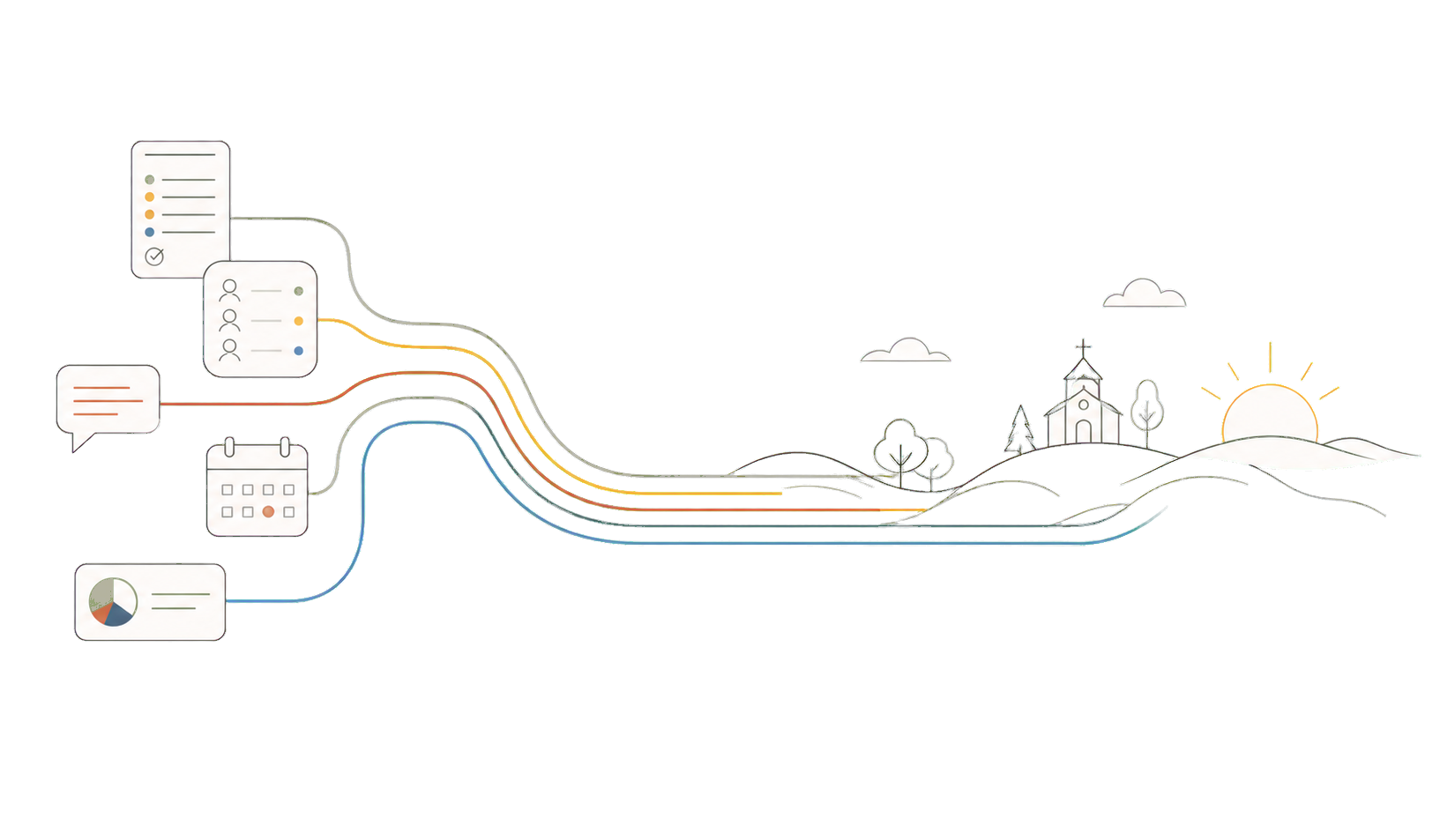
Planning Center stays in place. It remains where a church manages its people, services, calendars, groups, and other ministry information. Ministry Margin connects to the Planning Center account a church already uses and creates Apple-native applications for particular settings and tasks.
That is the relationship I always want to preserve. Ministry Margin should make Planning Center more valuable to the people who already use it.
What I Am Building
Ministry Margin Directory for iPhone gives pastors and church staff quick access to the people they already have permission to see in Planning Center. You can search by name, phone number, or address, see households with People Map and People Nearby, call, text, email, get directions, save someone to Apple Contacts, and keep private prayer requests connected to the people in your care.
It is a deliberately focused app. It takes information that already lives in Planning Center People and makes it useful in the moments when you are standing in a hallway, driving to a visit, or trying to follow up before you forget. Prepared directory sources remain available locally between refreshes, while Planning Center continues to manage the church's original records.
The flagship Ministry Margin app for Mac brings together services, people, People Map, People Nearby, reports, prayer, and a clear view of the ministry week in a native desktop workspace. It can show people and shared addresses from a selected Planning Center People source, then move from a person's profile to others who live nearby. An iPad version is also planned because the iPad occupies a useful space between the deeper work done at a desk and the quick interactions that belong on a phone.
I am also thinking about creating more small and focused iPhone apps, with the goal of giving them useful overlap and keeping information in sync through Planning Center or iCloud. While I am not going to publish a product roadmap, I do plan to begin developing multiple iPhone apps this year. Most of these next tools will focus on shifting the mindset from managing and moving data toward providing practical ways to accomplish the work of caring for people.
Some of these apps will connect to Planning Center. Others will address ministry work that Planning Center was never intended to manage. The common thread is not one enormous application that tries to do everything. It is a family of thoughtful tools, each with a clear purpose. At Ministry Margin, I am building a suite of tools that work together, and I plan to maintain them for the long haul.
What I Hope Ministry Margin Becomes
Ministry Margin began with tools I wanted for my own work, but I do not want it to remain a personal side project. I want to build something that can serve ministry workers for a long time. That means creating applications worth paying for, supporting them carefully, continuing to improve them, and building the company at a pace that is both ambitious and sustainable.
I am not trying to build the largest company in church technology. I would be thrilled to build a small and durable company with a connected suite of excellent applications, a growing community of people who find them genuinely useful, and the resources to keep developing and maintaining them for decades.
The goal is not productivity for its own sake. Pastors are not factory managers, and people are not units of output. But unnecessary administrative friction still costs time and attention. A forgotten follow-up matters. A prayer request separated from a person matters. A tool that adds confusion to an already full week matters.
Software cannot shepherd anyone. It cannot pray, preach, exercise wisdom, or love the church. It can help us remember. It can help us prepare. It can put the right information in front of us at the right time and then get out of the way.
That is what I am trying to build with Ministry Margin: a growing family of software made by a pastor, for ministry workers, built with deep gratitude for Planning Center and shaped by the real work of the local church.
The aim behind every tool